SCIENCE
Inside Salvadora Persica: The Compounds That Make Siwak Work.

The case for the siwak (also spelled miswak) is often made on history. Seven thousand years of use, an endorsement from the World Health Organization, the recommendation of the Prophet Muhammad in the seventh century. All true. But the more interesting case is the clinical one, because Salvadora persica turns out to be one of the most thoroughly studied medicinal plants in oral health research, and the studies keep landing on the same conclusion: the siwak is not just a piece of wood. It is a delivery system for a documented mix of bioactive compounds, each with a known mechanism of action.
This article walks through the active chemistry of the Salvadora persica root, what each compound does in the mouth, and what the peer-reviewed literature says about the combined effect. It is intended as a reference for readers who want to know exactly what they are getting when they use a SiwakStick.
The short list of active compounds
Phytochemical analysis of Salvadora persica root has been published in journals including the Journal of Ethnopharmacology, the Journal of Clinical Periodontology, the Indian Journal of Dental Research, and the Journal of Contemporary Dental Practice. Across this literature, the compounds consistently identified as biologically active in the mouth include:
- Silica
- Sodium bicarbonate
- Tannins
- Alkaloids, particularly salvadorine and trimethylamine
- Sulphur-containing compounds, including benzyl isothiocyanate
- Fluoride, naturally occurring
- Vitamin C
- Calcium
- Saponins
- Resins
- Essential oils
The exact concentration of each compound varies with the source region, the part of the plant used (root versus stem versus branch), the age of the tree, and the time since harvest. Root tissue from mature trees in the Najd region of Saudi Arabia is generally considered the highest-grade source. Freshness matters, because some of the volatile compounds dissipate within weeks of exposure to air. This is why SiwakStick uses vacuum-sealed packaging.
The mechanical layer: silica and fibres
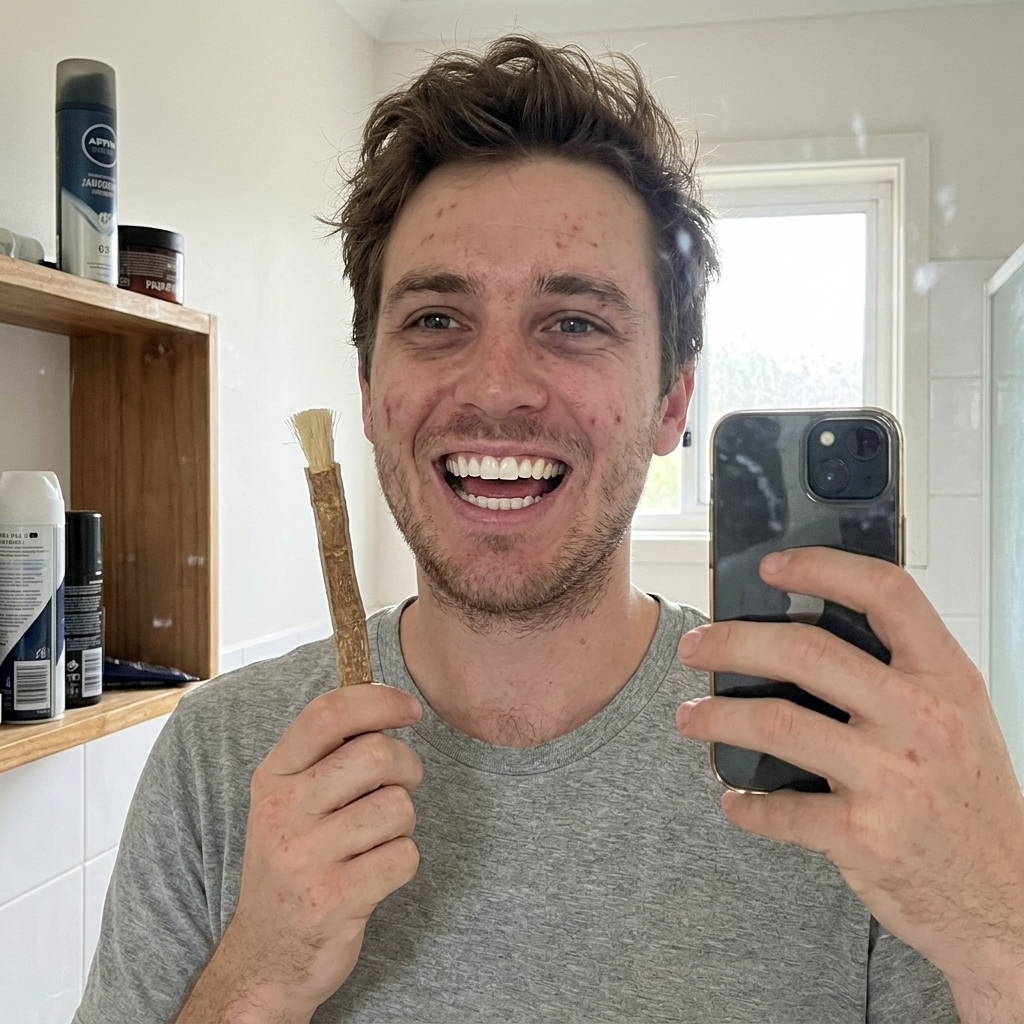
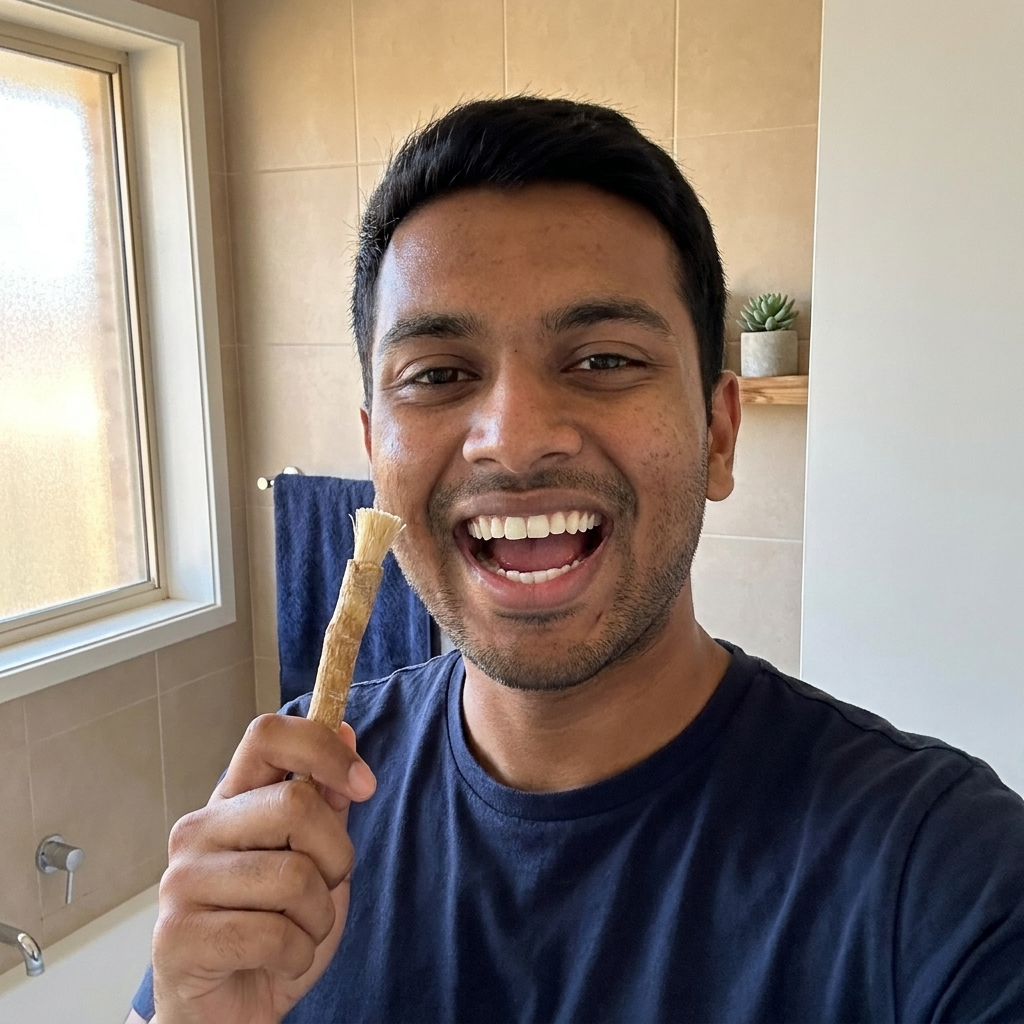
Before any of the chemistry activates, the siwak works mechanically. The natural fibres of Salvadora persica are thin, slightly stiff, and embedded with silica crystals. Silica is the same mineral added as an abrasive to commercial toothpaste. When you brush your teeth with a frayed siwak, the silica-loaded fibres glide across the enamel surface and remove plaque biofilm and surface stains by gentle abrasion.
Studies measuring relative dentin abrasivity (RDA) of siwak brushing place it in the moderate-abrasive range, comparable to most adult toothpastes. The abrasion is high enough to be effective at plaque removal but low enough that it does not noticeably wear enamel even with daily use over years.
The fibre architecture itself is also worth noting. Each fibre is approximately fifty microns in diameter, fine enough to reach into the gaps between teeth where a standard manual toothbrush bristle cannot. Several comparative trials have measured interproximal plaque (the plaque between teeth, traditionally cleaned by flossing) and found that siwak users have lower interproximal plaque scores than users of conventional manual toothbrushes, suggesting that the fibre fineness functions as a partial substitute for flossing.
The antibacterial layer: sulphur compounds
The distinctive sharp taste of a fresh siwak comes from sulphur-containing compounds, the most studied of which is benzyl isothiocyanate. This compound has a documented antibacterial effect against a range of oral pathogens, including:
- Streptococcus mutans. The primary cariogenic bacterium responsible for tooth decay. Studies measuring S. mutans counts in saliva before and after siwak use have found reductions ranging from 30 to 60 percent depending on the trial.
- Lactobacillus acidophilus. Another acid-producing cariogenic species.
- Porphyromonas gingivalis. The primary pathogen implicated in adult periodontitis (gum disease).
- Candida albicans. A yeast that contributes to oral thrush in immunocompromised patients.
Benzyl isothiocyanate works by penetrating bacterial cell walls and disrupting the enzymes that bacteria use to metabolise sugars. The compound is also present in small quantities in cruciferous vegetables (mustard, horseradish, watercress), where it is responsible for the characteristic sharp flavour. In the concentration delivered by siwak chewing, it is not detectable as a harsh taste to most users after the first few days of use.
The pH layer: sodium bicarbonate
Sodium bicarbonate (baking soda) is naturally present in Salvadora persica root tissue. Its function in the mouth is straightforward: it neutralises acid. The biggest single driver of enamel erosion in modern diets is acid exposure, whether from soft drinks, citrus, fermentable carbohydrates broken down by oral bacteria, or stomach acid reflux. Neutralising mouth pH after meals is one of the simplest interventions for preventing enamel demineralisation.
Sodium bicarbonate is also a mild whitening agent. It does not bleach enamel but it does lift surface staining from coffee, tea, and red wine. Long-term siwak users frequently report incidentally whiter teeth without any deliberate whitening intervention.
The remineralisation layer: fluoride and calcium
One of the more surprising findings from Salvadora persica analysis is that the root contains naturally occurring fluoride. The exact concentration depends on the soil chemistry of the source region, but published measurements range from about 1.0 to 1.4 milligrams per kilogram of fresh root tissue.
That is meaningfully lower than the fluoride concentration in conventional toothpaste, which contains approximately 1,000 to 1,500 parts per million. But it is delivered slowly and continuously throughout each brushing session, and it is paired with calcium that is also naturally present in the wood. The combination is the same one used in modern remineralising toothpastes: small amounts of fluoride to drive the formation of fluorapatite (a more acid-resistant form of tooth mineral) at the enamel surface, with bioavailable calcium to feed the process.
The clinical literature on siwak use and remineralisation is more limited than the literature on plaque and gingivitis reduction, but the trials that have been done suggest a measurable protective effect against early caries lesions.
The gum-tightening layer: tannins
Tannins are astringent polyphenolic compounds found in tea, wine, and the bark of many trees. In Salvadora persica root they serve a specific function: they tighten gum tissue by causing surface proteins to contract. This produces a tangible firming sensation in the gums after brushing, which is part of the reason the siwak is associated with reduced gingival bleeding.
Gingivitis (gum inflammation) is reversible in its early stages. The standard clinical intervention is mechanical plaque removal at the gum line plus an astringent rinse, often containing chlorhexidine. The siwak combines both interventions in a single tool. The fibres mechanically clean the gum margin, and the tannins released during brushing produce the astringent effect.
The anti-inflammatory layer: alkaloids
The two alkaloids most consistently identified in Salvadora persica root are salvadorine and trimethylamine. Both have been shown in vitro to inhibit pathways that drive inflammation in oral tissue. The clinical effect in vivo is harder to measure directly, but a number of trials have noted reduced gingival inflammation scores in siwak users compared to non-users, which is consistent with the in vitro findings.
What the head-to-head studies show
The strongest evidence for the siwak is from head-to-head comparison studies that put siwak use against conventional toothbrush use in matched populations. A 2014 systematic review published in the Journal of Periodontology identified twenty such trials. The summary finding was that siwak use was at least as effective as a conventional toothbrush for plaque removal and gingivitis reduction, and in nine of the twenty trials it was statistically more effective.
A 2020 follow-up review in the International Dental Journal reached the same conclusion with newer data. The authors noted that the technique used by the participant matters significantly: when siwak users were trained on correct technique, the outcomes improved further.
Safety profile
Salvadora persica is one of the few medicinal plants with a multi-thousand-year safety record at population scale. There are no documented serious adverse effects from siwak use. The only commonly reported side effect is mild gum sensitivity in the first week of use as the user adjusts to the technique and the active compounds, which resolves with continued use.
The compounds in Salvadora persica are not psychoactive. They do not interact with prescription medications in any documented way. The fluoride content is low enough that there is no risk of fluorosis even with multiple daily use sessions.
What this means for SiwakStick users
What you are holding when you hold a SiwakStick is a delivery vehicle for the compounds above. You are not buying a brand, a flavour, or a packaging concept. You are buying a fresh cutting of Salvadora persica root, vacuum-sealed to preserve the volatile compound content, ready to soften and chew into a brush. The chemistry does the rest.
See the SiwakStick packs to start.