HOW-TO
How to Use a Siwak: The First-Timer's Complete Guide.

The siwak (sometimes also written as miswak) is the simplest oral hygiene tool ever invented. There is one ingredient: the root of the Salvadora persica tree. There is no toothpaste, no plastic, and no learning curve once you have done it twice. But for first-time users the technique is unfamiliar enough to be worth walking through carefully, because doing it correctly is the difference between a brushing session that genuinely cleans your teeth and one that feels like chewing a twig.
This guide assumes you have your first SiwakStick in hand. We will cover preparation, technique, frequency, brush head replacement, and what to expect in the first seven days. By the end you will know exactly how to integrate the siwak into your daily routine.
Step one: soak the tip
A fresh SiwakStick is sealed in a wrapping that keeps the wood and its active compounds fresh from harvest to first use. When you unwrap it, the wood will be firm and dry. You cannot use a dry stick directly because the fibres at the tip will not separate into a brush, and the active compounds need a small amount of moisture to release into the mouth.
Cut or peel back about one centimetre of bark from one end. Most SiwakSticks have a clear notch indicating the brush end. Place that end in a glass of warm (not hot) water and let it soak for about three to five minutes. Some users prefer to soak for longer, even overnight. Both are fine. The minimum is enough for the wood to soften and the fibres at the tip to start to relax.
If you are in a rush you can soak it for one minute and proceed. The brushing experience will be slightly less smooth, but the chemistry still works.
Step two: chew the end into a brush
This is the step that first-time users always pause at, because it feels strange to chew a stick. Trust the process. Place the soaked end between your back molars and bite gently to compress the wood. Then rotate the stick a quarter turn and bite again. Continue until the end has frayed into a fan of soft, separated fibres. This usually takes ten to twenty bites, or about thirty seconds.
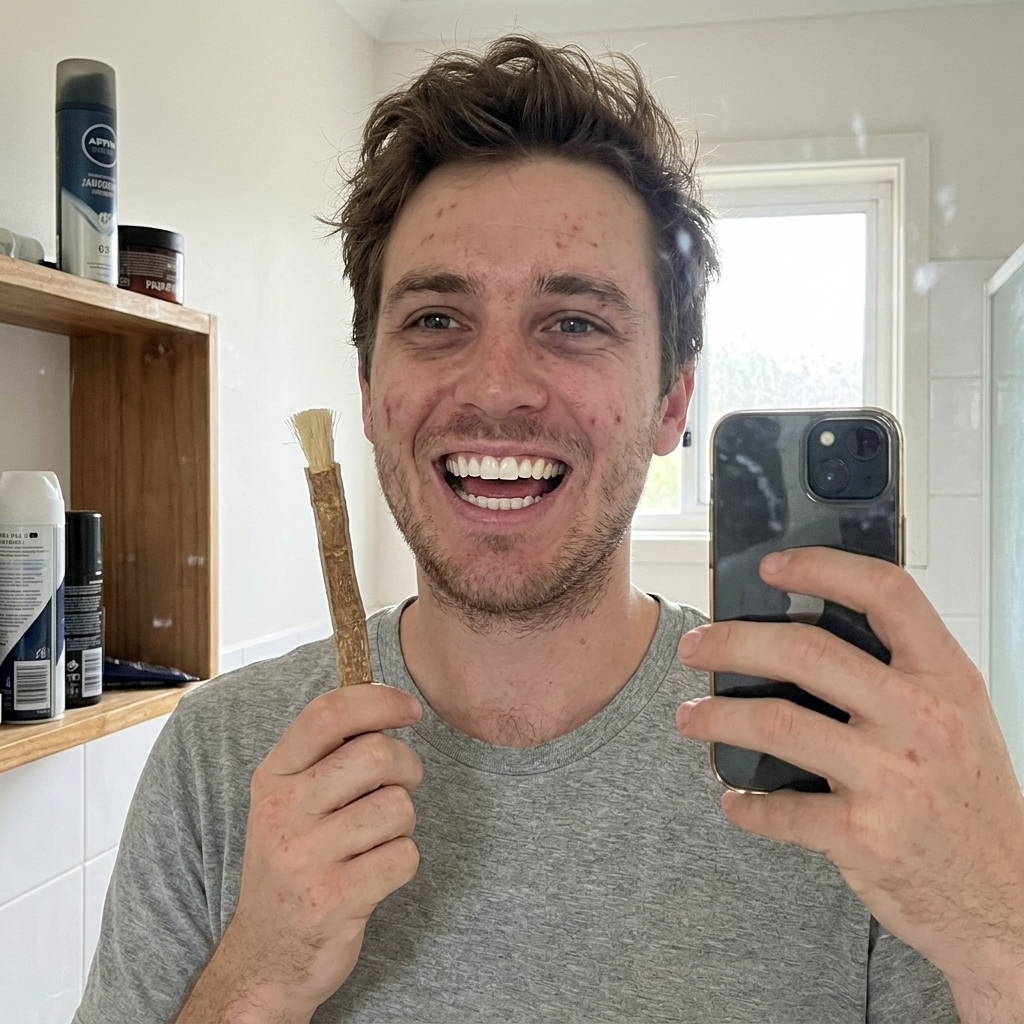
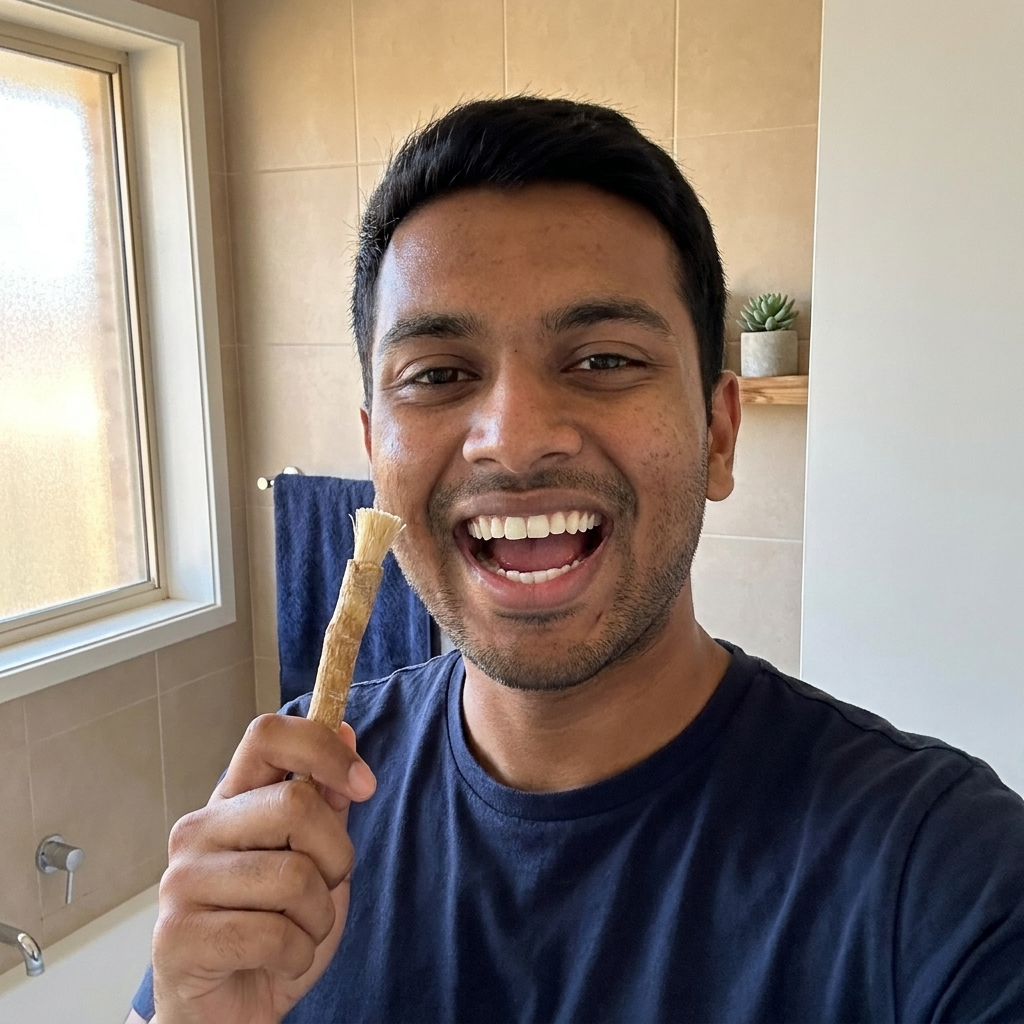
You will know the brush head is ready when the fibres look something like a small natural paintbrush: separated, slightly flexible, and pale in colour at the very tip. The fan should be roughly the width of two or three of your teeth, no wider, because that is the working surface you will be brushing with.
The wood has a sharp, mildly bitter taste at this point. Some new users find this off-putting in the first few sessions and then come to enjoy it. The taste comes from the sulphur compounds and tannins, which are some of the most chemically active components of the stick.
Step three: brush your teeth
Hold the SiwakStick like a pencil, with your thumb on top of the bristled end to give the brush head a small amount of backing pressure. There are two correct techniques in widespread use.
The vertical technique. Move the brush head in short up-and-down strokes from the gum line toward the tip of each tooth, working one tooth or one pair of teeth at a time. This is the technique most commonly recommended by dentists today because it mimics the modified Bass technique used for manual brush instruction, and it is gentle on the gum tissue.
The circular technique. Make small circular motions over each tooth surface, similar to the way a soft electric toothbrush is used. This is faster and slightly less thorough for the gum margin, but acceptable for routine use.
Whichever technique you use, work systematically around the mouth: outer surfaces of the upper teeth, outer surfaces of the lower teeth, inner surfaces of the upper teeth, inner surfaces of the lower teeth, and finally the biting surfaces of the back molars. Allow about two minutes total. The natural fibres are fine enough to reach between the teeth on most tooth shapes, but for tight contacts you can angle the stick to push the brush head between the surfaces directly.
Do not press hard. The siwak is most effective with gentle pressure, because the active compounds release as the wood is gently compressed and the fibres glide across the enamel. Pressing harder does not produce a better clean and can irritate the gums in the first week.
Step four: rinse, or do not
You can rinse with water at the end of the session if you prefer, but it is not required. Many long-term siwak users do not rinse, on the grounds that leaving a small residual film of the active compounds on the teeth and gums extends their effect into the rest of the day. If you have used commercial toothpaste your entire life, your reflex will be to rinse. Try going without for a week and see how it feels.
How often to use it
Twice a day is the modern dental hygiene standard and the SiwakStick fits straight into that pattern: once in the morning, once before bed. Most users settle into this rhythm within a week.
If you want to use it more often, you can. Some users brush after meals as well, which is broadly equivalent to the traditional Islamic practice of using the siwak before each of the five daily prayers. There is no upper safety limit, because the chemistry is mild enough that more frequent use does not produce any adverse effect. The only practical constraint is that more frequent use will wear the brush head faster, meaning you will trim and re-chew a new head more often.
When to trim the brush head
A SiwakStick brush head lasts about three to seven days of twice-daily use depending on technique and pressure. You will know it is time to trim when the fibres become matted and dark, lose their springiness, or develop a sour taste. At that point:
- Use a clean knife, scissors, or your front teeth to cut off the spent fibres, removing about one centimetre of stick.
- You will now have a fresh, unchewed end. Repeat the soak-and-chew steps above to create a new brush head.
A typical SiwakStick supports between three and six brush head cycles before the stick itself is consumed and needs to be replaced. At twice-daily use that works out to between two and four weeks per stick for most users.
Storage between uses
Between brushing sessions, store the SiwakStick somewhere it can air-dry. A countertop holder or a clean dish away from the sink splash zone is ideal. Do not seal it in a plastic bag or airtight container while damp, because this allows mould to develop on the fibres. The wood itself is naturally antibacterial enough that it will not develop microbial growth in normal conditions, but a wet stick in a closed container is the exception.
If you are travelling, a small cotton pouch or a paper sleeve works well. The original SiwakStick wrapping is intended for storage before first use and is not airtight, so it can be reused if it is dry.
What to expect in the first week
Days one and two will feel unfamiliar. The taste, the texture, and the absence of foam are all new. Most users notice an unusual cleanness in the mouth within the first few sessions, even before they have learned the technique well.
Days three through five are the adjustment period. Some users experience mild gum sensitivity as the gum tissue responds to the astringent tannins. This typically resolves by the end of the week. If your gums bleed slightly during this period it usually indicates pre-existing inflammation that the siwak is starting to clear up, not new damage caused by the brushing. If bleeding is severe or persists past two weeks, consult a dentist.
By days six and seven the technique starts to feel natural and the unique aspects of the experience begin to feel normal. Many users report that the routine takes slightly less time than brushing with a conventional toothbrush plus toothpaste, because there is no paste application step, no rinse, and no brush head to clean afterwards.
Common mistakes
Chewing the brush head too wide. Wider is not better. A brush head fanned out to the width of four or five teeth is unwieldy and does not give you fine control. Aim for two or three teeth wide.
Brushing too hard. The siwak rewards a light touch. Hard pressure does not improve cleaning and can irritate the gums.
Adding toothpaste. This dilutes the active compounds and is unnecessary. The wood is the paste.
Not soaking the stick long enough. If you skip the soak step the wood will be hard and the fibres will not separate well. Three to five minutes is the minimum for a comfortable brushing experience.
Not trimming the brush head. Once the fibres mat and darken they are no longer cleaning effectively. Cut them off and create a fresh head.
Storing it wet in a sealed container. Air-dry storage only.
Combining the siwak with other oral care
The siwak is a complete oral hygiene tool on its own and does not require flossing, rinsing, or a separate toothbrush. The fine fibres reach between the teeth in most tooth alignments, the active compounds neutralise acid and reduce bacteria, and the silica polishes the enamel surface. If your routine currently includes flossing and an antimicrobial rinse, you can drop both. If you have a specific oral health condition (heavy tartar, periodontal disease, orthodontic appliances) consult your dentist before changing your routine.
You can continue to see your dentist for regular cleanings on the standard six-month schedule. Many SiwakStick users report that their dentists comment positively on plaque scores at follow-up appointments after switching.
That is it
Soak the tip, chew the end into a brush, brush your teeth gently for two minutes, air-dry between uses, trim the head when it gets matted, replace the stick when it is consumed. The siwak is the simplest oral hygiene tool ever invented, and once you have used it three or four times the technique stops being unfamiliar and starts to feel obvious. The seven-thousand-year track record is on your side.
See the SiwakStick packs to get started.