HISTORY
What Is a Siwak? The 7,000-Year Toothbrush, Explained.

Before plastic. Before fluoride toothpaste. Before the soft nylon bristles that arrived in 1938, people across Africa, the Middle East, the Indian subcontinent, and parts of Asia were brushing their teeth with a chewing stick. The stick had a name and a source: the siwak, cut from the Salvadora persica tree. It is still in daily use by hundreds of millions of people, and the World Health Organization formally recommended it for oral hygiene in 1986. The SiwakStick you can buy today is the same tool, sealed and shipped, with no plastic and no paste.
This article explains exactly what a siwak is, where it comes from, the documented history of its use, and why a stick of natural wood continues to outperform expectations in independent clinical research.
The basic definition
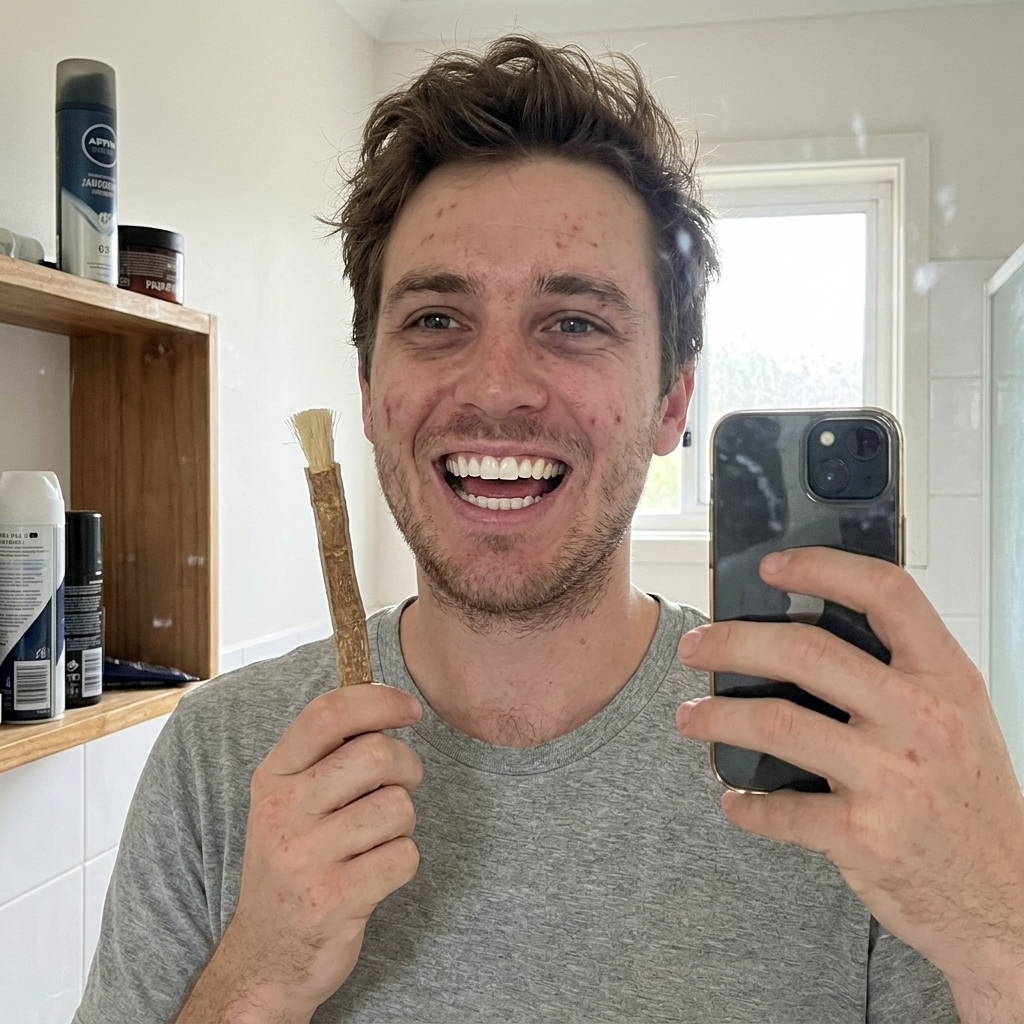
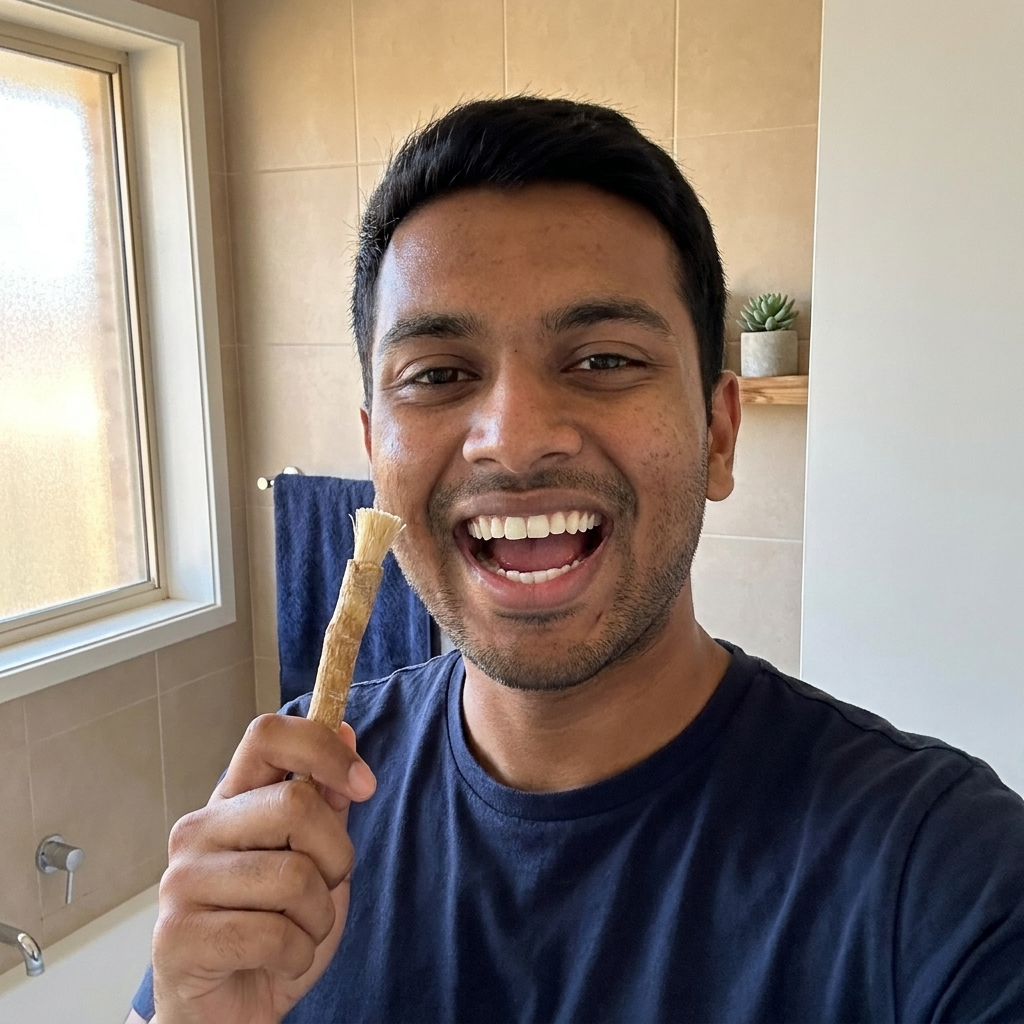
A siwak (also commonly spelled miswak in some regions) is a teeth-cleaning twig, typically four to six inches long and roughly the diameter of a pencil. It is cut from the root, stem, or branch of the Salvadora persica tree, a small evergreen native to arid regions of North Africa, the Arabian Peninsula, the Middle East, parts of India, and East Africa. The tree is also called the arak tree, the toothbrush tree, the mustard tree, or peelu, depending on the region.
To use a siwak, you soften the tip in water for several minutes, then chew the soaked end until the wood fibres fray into a natural brush. You then brush your teeth with that frayed end. There is no toothpaste involved. The active compounds inside the wood are released as you chew and brush, and the fibres themselves act as a mechanical cleaning surface. When the brush head wears down, you cut off the spent portion and chew the next inch into a fresh brush head. One stick lasts a typical user between two and four weeks.
Where Salvadora persica grows
Salvadora persica is a drought-tolerant evergreen that thrives in saline, alkaline, and otherwise inhospitable soils where most plants will not grow. Mature trees reach about six metres in height. They are common in the dry zones of Saudi Arabia, Sudan, Egypt, Pakistan, India, Yemen, Somalia, and Ethiopia, and are cultivated commercially in parts of East Africa and the Indian subcontinent specifically for the oral hygiene market.
The roots are particularly valued for siwak production because the active compound concentration is higher in root tissue than in stem or branch tissue. Root-sourced siwak sticks are paler in colour and slightly milder in taste. Stem-sourced sticks are darker and have a stronger natural flavour. SiwakStick sources from root cuttings.
A 7,000-year history
The earliest archaeological evidence of toothbrush sticks comes from Babylonia, roughly 5,000 BCE. Excavations from that period have surfaced chewing sticks in burial sites, often placed near the head, indicating they were considered personal essentials. Ancient Egyptian medical texts from around 1,500 BCE describe a similar practice. Tomb illustrations show pharaohs and nobles using a frayed-end stick that matches the modern siwak in form and function.
By the seventh century the practice had spread across the Islamic world. The Prophet Muhammad strongly recommended the siwak for cleansing the mouth before prayer, and the cultural reinforcement of that recommendation has carried the practice forward for fourteen hundred years across every region where Islam took hold. Today, regular siwak users are concentrated in the Muslim world, but the practice predates Islam by several thousand years and has independent histories in pre-Islamic North Africa, ancient India, and parts of sub-Saharan Africa.
European visitors to North Africa and the Middle East from the sixteenth century onward documented siwak use in their travel writing. Greek physician Galen wrote about chewing sticks in the second century. Ibn Sina, the eleventh-century Persian physician known in Europe as Avicenna, included specific recommendations for siwak use in his Canon of Medicine, which remained a standard medical reference text in Europe and the Islamic world for the next six hundred years.
What is inside the wood
The reason the siwak works is chemistry. Salvadora persica root contains a documented mix of more than twenty active compounds, many of which independently demonstrate antibacterial, anti-plaque, and remineralising effects in published research. Some of the more studied ones include:
- Silica. A naturally abrasive mineral that polishes the tooth surface as the fibres pass across it. The same compound is added to commercial toothpaste as an abrasive agent.
- Sodium bicarbonate. A mild alkaline salt that neutralises mouth acidity and gently whitens the enamel surface.
- Tannins. Astringent compounds that tighten the gum tissue and reduce inflammation.
- Sulphur compounds. The natural source of the siwak's distinctive sharp taste. These contribute to the antibacterial effect.
- Fluoride. Yes, naturally occurring. Salvadora persica contains a small but consistent quantity of fluoride that is released as the fibres are chewed and brushed.
- Alkaloids and saponins. Plant-defence compounds that disrupt bacterial cell walls.
The full chemistry has been studied in detail by research teams at King Saud University in Riyadh, the Faculty of Dentistry at Aligarh Muslim University in India, and Wits University in South Africa, among others. The findings are consistent: siwak users show lower plaque scores, lower gingival bleeding scores, and lower counts of cariogenic bacteria such as Streptococcus mutans than control groups using nothing at all, and in several head-to-head trials the siwak performs at least as well as a conventional toothbrush.
The WHO endorsement
In 1986 the World Health Organization included the siwak in its formal recommendations for oral hygiene in regions where access to conventional toothbrushes is limited. The WHO has not revoked or revised that recommendation. The 2000 follow-up consensus statement reaffirmed it, noting that the siwak combines mechanical cleaning with chemically active compounds in a single low-cost, biodegradable tool.
That endorsement is sometimes misread as faint praise, as if the WHO were saying the siwak is acceptable as a fallback for poor regions. The actual language goes further. The recommendation acknowledges that under controlled trial conditions the siwak frequently outperforms standard plastic brushes when used correctly, and that the cultural and environmental case for it is independent of cost-of-access considerations.
Why it is gaining attention again
The siwak never disappeared. What has changed in the last decade is that consumers in Western markets are starting to look for oral care alternatives that meet three criteria at once: clinically effective, free of synthetic chemicals, and low impact on the environment. The plastic toothbrush meets one of those criteria at best. The siwak meets all three by design, because it is a single piece of biodegradable wood with chemically active fibres and no manufactured packaging.
The growing scrutiny on conventional oral care products has also helped. Sodium lauryl sulphate, the foaming agent in most commercial toothpastes, is now known to cause oral irritation in a subset of users and may aggravate canker sores. Synthetic fluoride dosing in adults is being re-examined. Microplastics from plastic bristles have been found in water supplies. None of these concerns apply to a siwak.
Common misconceptions
A few clarifications, because misinformation about the siwak is common online.
The siwak is not a religious requirement. Its use is encouraged within Islamic tradition, but the tool itself is a piece of wood with chemical and mechanical properties that work regardless of who uses it. The siwak's pre-Islamic history is several thousand years longer than its post-Islamic history.
It is not a "natural" substitute that is weaker than a real toothbrush. In multiple clinical trials it matches or exceeds the cleaning efficacy of a standard manual toothbrush. The bristled end produces both mechanical action and chemical action at the same time, which is a combination a plastic brush plus toothpaste cannot replicate without two products.
You do not need toothpaste with it. The wood is the paste. Adding toothpaste defeats the purpose and dilutes the active compounds.
It does not stain your teeth. The sharp taste of a fresh siwak can lead first-time users to expect a residue. There is none. The tannins are astringent, not staining.
What this means for your routine
The SiwakStick is the same tool that has been in use for seven millennia, cut from the same tree, with the same active compounds. The only difference is that it arrives sealed in a wrapping that preserves freshness, so the active compound content is as high as a freshly cut stick from the source region. You can use it once, twice, or three times a day depending on preference. There is no toothpaste to buy and no plastic to dispose of, and the depleted brush end gets cut off and the next inch becomes the new brush head.
If the seven-thousand-year track record was not enough, the WHO endorsement and the consistency of the clinical literature are. The siwak is one of the very few oral hygiene tools that has been used at population scale for long enough to have an effectively unlimited safety record.
See the SiwakStick packs to start.